
In today’s competitive furniture and interior manufacturing industry, controlling production costs while maintaining high quality is essential. Every wasted sheet of material, inaccurate cut, or production error directly affects profitability. This is why more manufacturers, contractors, and interior businesses are investing in CNC machining.
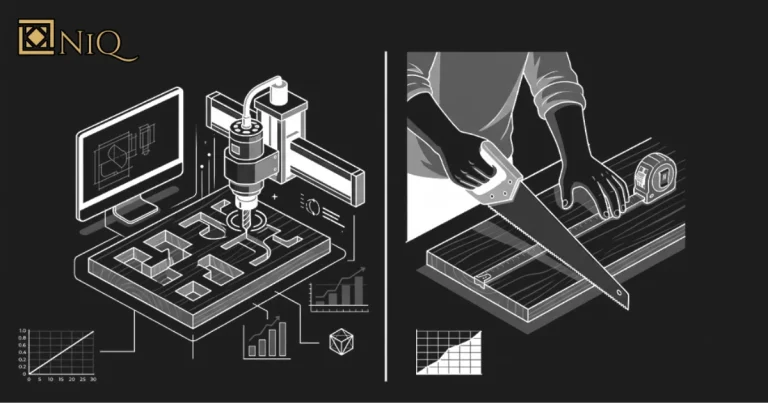
CNC (Computer Numerical Control) machines are designed to maximize accuracy, improve production efficiency, and make better use of raw materials. By replacing traditional manual cutting methods with computer-controlled processes, CNC technology helps businesses reduce material waste, minimize errors, and lower overall production costs.
Whether you’re producing modular furniture, kitchen cabinets, wardrobes, office furniture, or custom interior components, CNC machining offers significant cost-saving advantages throughout the manufacturing process.
Why Material Waste Matters
Wood-based panels such as MDF, plywood, particle board, laminated boards, and HDF represent a major portion of furniture manufacturing costs. Every unnecessary offcut or incorrectly cut panel increases expenses and reduces profitability.
Manual cutting often results in inefficient sheet layouts, inaccurate measurements, and damaged components that need to be remade. Over time, these losses can have a significant impact on production budgets.
CNC machines address these challenges by combining precision cutting with intelligent software that optimizes every sheet.
Optimized Sheet Layouts
One of the biggest advantages of CNC machining is its ability to create optimized cutting layouts, often known as nesting.
Before cutting begins, specialized software automatically arranges all required parts on the sheet in the most efficient way possible. This maximizes material usage while minimizing unused spaces and offcuts.
Instead of relying on manual planning, manufacturers can consistently achieve better material yield and reduce waste across every production run.
Precision Cutting Minimizes Errors
Incorrect measurements and cutting mistakes are among the most common causes of material waste in traditional woodworking.
CNC machines follow digital design files with exceptional accuracy, ensuring every component is cut according to its exact dimensions. This significantly reduces errors caused by manual measuring, marking, or cutting.
Accurate cutting means fewer rejected panels, less rework, and better utilization of expensive materials.
Consistent Production Quality
Every component produced by a CNC machine follows the same programmed instructions.
Whether manufacturing ten parts or ten thousand, each panel is cut with the same precision and consistency. This eliminates dimensional variations that often occur during manual production and reduces the need to replace incorrectly sized components.
Consistent quality also improves assembly efficiency and reduces installation issues later in the project.
Less Rework Means Lower Costs
Production errors not only waste materials but also consume valuable labor time.
When components are cut incorrectly, workers must measure, cut, and finish replacement parts, increasing production costs and delaying project completion.
Because CNC machining delivers reliable accuracy from the start, manufacturers spend less time correcting mistakes and more time producing finished products.
Faster Production Improves Efficiency
Time is another major production cost.
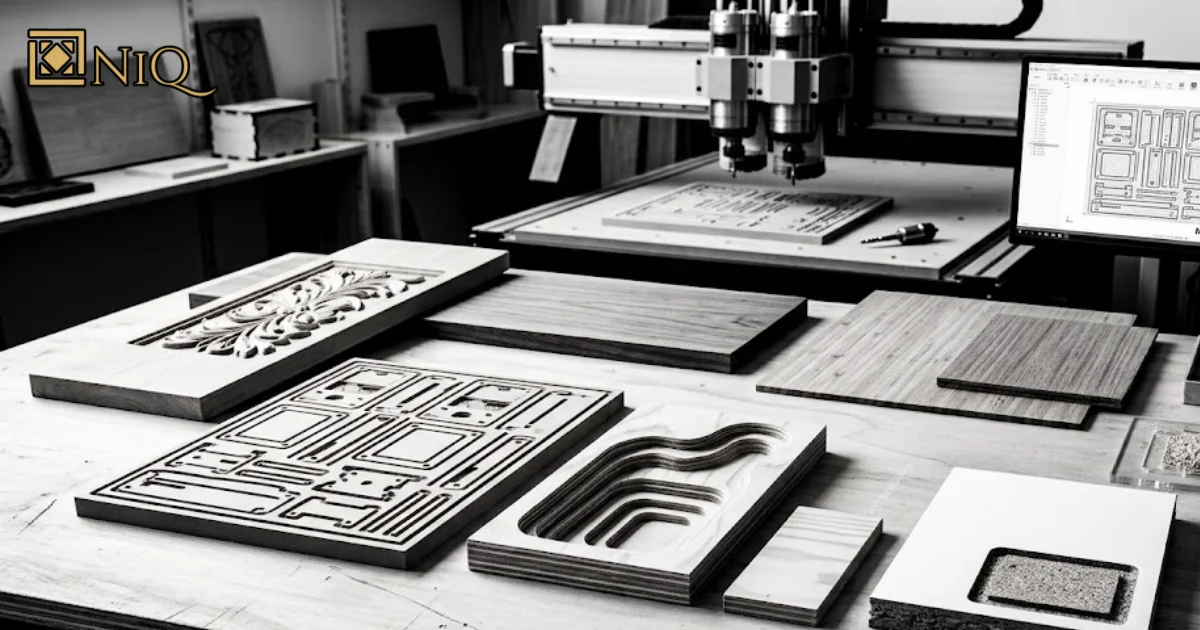
CNC machines perform cutting, drilling, routing, grooving, and other machining operations automatically without constant operator intervention. Multiple panels can be processed quickly while maintaining the same level of precision.
This higher production speed enables businesses to complete more orders in less time, increasing productivity without sacrificing quality.
Better Use of Labor
Traditional woodworking often requires several workers to measure, mark, cut, inspect, and finish components.
With CNC technology, much of this work is automated. Skilled operators prepare the machine and monitor production while the CNC system performs the machining process.
This allows businesses to reduce manual labor requirements and allocate employees to higher-value tasks such as assembly, finishing, or quality inspection.
Improved Inventory Management
Accurate CNC machining makes production more predictable.
Because material usage is calculated before cutting begins, manufacturers can estimate raw material requirements more accurately. Better planning reduces excess inventory, minimizes shortages, and helps control purchasing costs.
Efficient inventory management also improves workflow and reduces storage expenses.
Reduced Waste Supports Sustainable Manufacturing
Reducing material waste isn’t only beneficial for profitability—it also supports environmentally responsible manufacturing.
By maximizing the use of every sheet and minimizing unnecessary waste, CNC machining helps conserve natural resources and reduces the amount of material sent for disposal.
Many furniture manufacturers adopt CNC technology as part of their sustainability initiatives while also lowering operating costs.
Applications Across Furniture Manufacturing
CNC machines help reduce production costs in a wide range of furniture and interior projects, including:
- Kitchen cabinets
- Wardrobes
- Office furniture
- Retail display units
- TV units
- Reception counters
- Shelving systems
- Modular furniture
- Wall panels
- Interior fit-outs
- Custom furniture manufacturing
Their ability to produce accurate, repeatable components makes them ideal for both custom and high-volume production.
Choosing a Professional CNC Machining Service
To achieve maximum cost savings, it’s important to work with a CNC machining provider that uses modern equipment, advanced nesting software, and experienced operators.
A reliable service provider should offer precision sheet cutting, drilling, routing, grooving, edge banding, and other machining services while maintaining strict quality control throughout the production process.
High-quality CNC services help ensure every panel is processed accurately, efficiently, and with minimal material waste.
Conclusion
CNC machining has transformed furniture manufacturing by making production more efficient, accurate, and cost-effective. Through optimized sheet layouts, precision cutting, reduced rework, faster production, and improved material utilization, CNC machines help businesses lower production costs while maintaining exceptional quality.
Whether you’re manufacturing custom furniture or producing large-scale interior components, CNC technology provides a smarter way to reduce waste, improve productivity, and increase profitability. Investing in professional CNC machining services is a practical step toward achieving higher-quality products with greater efficiency and long-term cost savings.