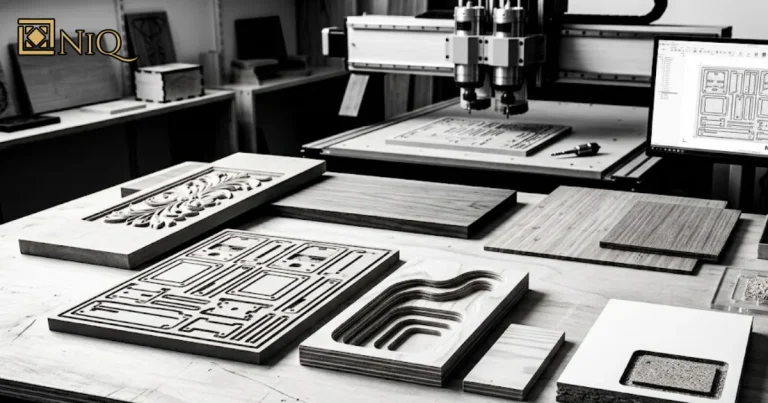
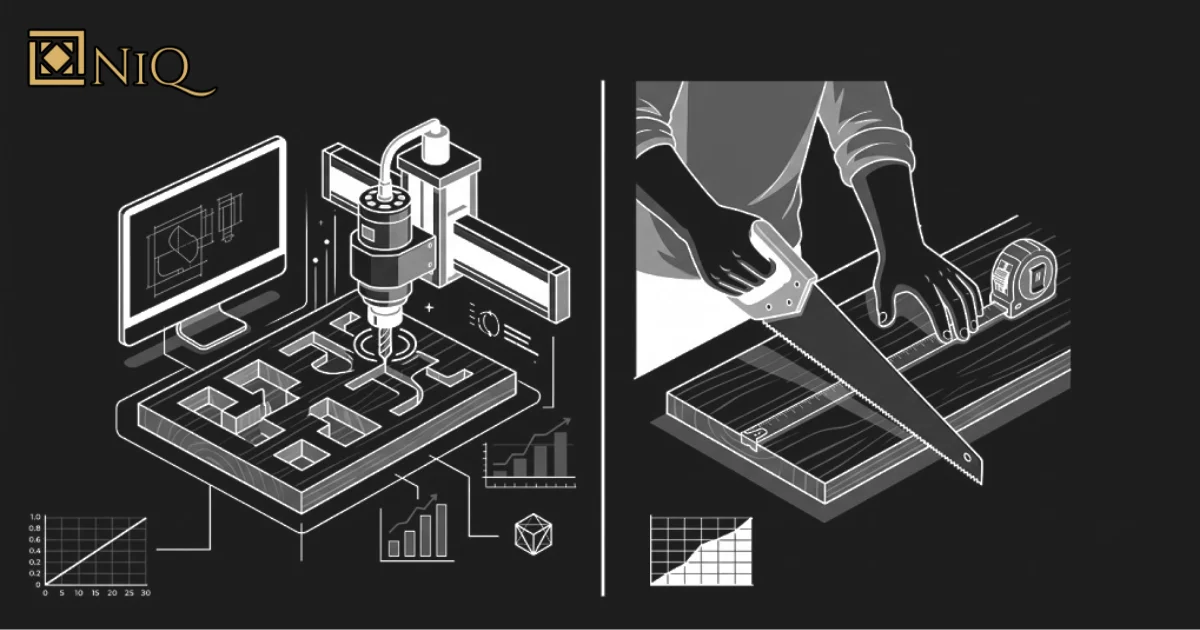

Accuracy is one of the most important factors in furniture manufacturing and interior construction. Even a small measurement error can lead to poorly fitting panels, uneven joints, wasted materials, and costly rework. While manual cutting methods have been used for decades, modern CNC cutting has become the preferred solution for businesses that demand precision, consistency, and efficiency.
CNC (Computer Numerical Control) cutting uses computer-controlled machines to process wood-based panels according to digital design files. Unlike manual cutting, which relies heavily on operator skill and repeated measurements, CNC machines follow programmed instructions with exceptional precision. This allows manufacturers to produce high-quality components that fit perfectly every time.
Understanding Manual Wood Cutting
Traditional wood cutting involves measuring, marking, and cutting materials using saws and handheld tools. While experienced craftsmen can achieve good results, the quality often depends on the operator’s skill, concentration, and consistency.
Factors such as inaccurate measurements, blade movement, human error, and repeated handling can cause slight variations between parts. Although these differences may seem minor, they become significant when producing furniture that requires precise assembly or large production runs.
What Makes CNC Cutting More Accurate?
CNC cutting eliminates many of the variables that affect manual cutting. Every movement is controlled by software, ensuring each cut follows the exact dimensions of the digital design.
Instead of relying on repeated manual measurements, the machine automatically positions the cutting tool and follows the programmed toolpath with remarkable accuracy. This results in perfectly sized components that require little or no adjustment during assembly.
Consistent Precision for Every Component
One of the greatest advantages of CNC cutting is repeatability.
Whether you need one panel or one thousand identical parts, every component is produced using the same digital program. This level of consistency is difficult to achieve with manual cutting, especially during large production runs.
For furniture manufacturers, this means cabinet doors, shelves, partitions, and panels fit together exactly as intended, reducing installation issues and improving product quality.
Reduced Human Error
Manual cutting requires multiple steps, including measuring, marking, positioning, and cutting. Every step introduces the possibility of human error.
CNC machines automate these operations, significantly reducing mistakes caused by incorrect measurements, misaligned cuts, or operator fatigue. Once the design file is loaded, the machine performs each cut with the same level of precision throughout the production process.
Cleaner and Smoother Cuts
High-quality CNC cutting tools produce smooth, chip-free edges that require less finishing than manual cutting.
Clean edges are especially important for laminated boards, MDF, plywood, and other decorative panels where damaged edges can affect the appearance of the final product. Better edge quality also improves the effectiveness of edge banding and creates a more professional finish.
Better Material Utilization
Material costs represent a significant portion of furniture production. CNC cutting software uses optimized cutting layouts, often referred to as nesting, to maximize the use of every sheet.
By arranging components efficiently, manufacturers can reduce offcuts and minimize waste without compromising quality. Manual cutting generally cannot achieve the same level of material optimization, especially for complex layouts.
Faster Production Without Sacrificing Accuracy
Speed and precision rarely go together in manual cutting. Increasing production speed often increases the likelihood of mistakes.
CNC cutting solves this challenge by combining automation with precision. Machines can process multiple components quickly while maintaining the same level of accuracy from the first cut to the last. This makes CNC technology ideal for both custom projects and high-volume manufacturing.
Ideal for Complex Designs
Modern furniture and interior projects often include curved edges, decorative patterns, grooves, slots, and custom profiles that are difficult to produce manually.
CNC machines can easily create these complex shapes by following digital design files. This allows manufacturers and designers to produce unique, detailed components without sacrificing precision or consistency.
Improved Assembly and Installation
Accurately machined components fit together more easily during assembly. Cabinet panels align correctly, shelves fit securely, and hardware positions remain consistent throughout the project.
This reduces installation time, minimizes adjustments on-site, and helps achieve a cleaner, more professional finished product.
Common Applications of CNC Cutting
CNC cutting is widely used across the furniture and interior industry for manufacturing:
- Kitchen cabinets
- Wardrobes
- Office furniture
- Retail display units
- TV units
- Wall panels
- Modular furniture
- Reception counters
- Interior partitions
- Custom wood components
Its precision makes it suitable for both residential and commercial projects where consistent quality is essential.
Why Businesses Prefer CNC Cutting
Furniture manufacturers, interior designers, architects, and contractors increasingly rely on CNC cutting because it delivers reliable results while improving overall production efficiency.
The combination of precision, repeatability, reduced waste, cleaner finishes, and faster turnaround helps businesses maintain high quality standards while controlling production costs.
Conclusion
When accuracy matters, CNC cutting offers clear advantages over manual wood cutting. Computer-controlled machining eliminates many of the errors associated with traditional methods while producing consistently precise, clean, and repeatable results.
Whether you’re manufacturing modular furniture, custom cabinetry, office interiors, or commercial fixtures, CNC cutting provides the precision needed to ensure every component fits perfectly. By choosing professional CNC machining services, businesses can improve product quality, reduce material waste, increase production efficiency, and deliver outstanding results for every project.