
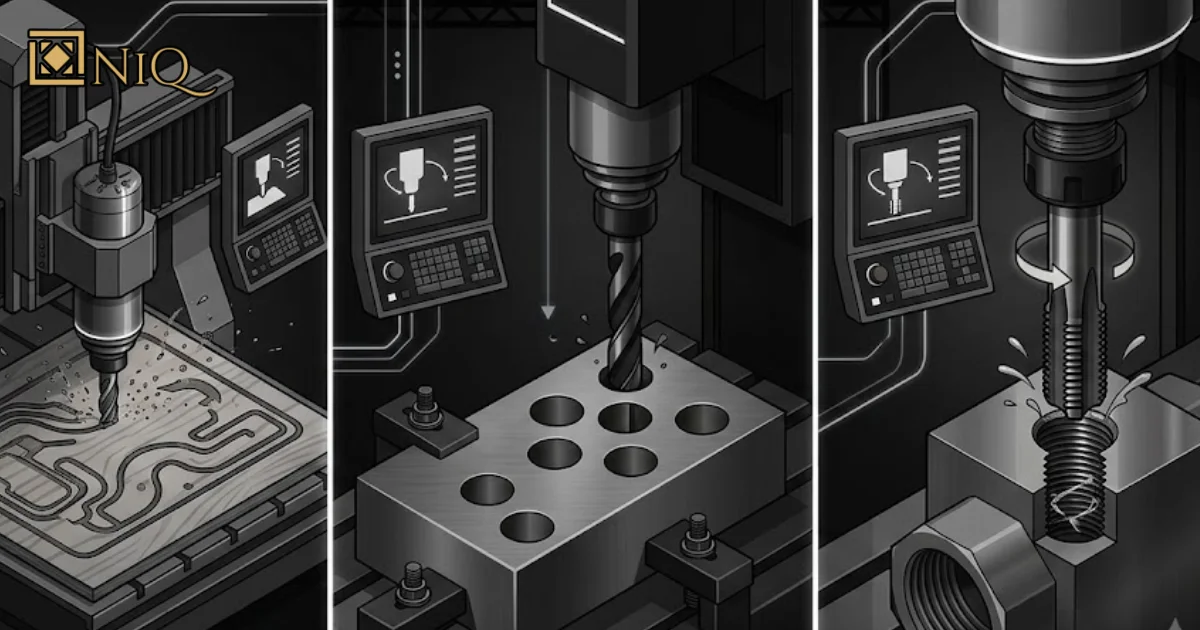

Modern CNC machines are capable of performing much more than simple cutting. In furniture manufacturing and interior production, CNC routing, CNC drilling, and CNC tapping are three essential machining processes that work together to produce accurate, ready-to-assemble components.
Although these processes are often performed on the same CNC machine, each serves a different purpose. Understanding the difference between routing, drilling, and tapping helps manufacturers, designers, and contractors choose the right machining process for their projects.
Whether you’re producing kitchen cabinets, wardrobes, office furniture, shelving, or custom wood products, knowing how each operation works can improve production efficiency and ensure high-quality results.
What Is CNC Routing?
CNC routing is a machining process that uses a rotating cutting tool to remove material from wood-based panels and create precise shapes, profiles, grooves, pockets, and decorative designs.
Unlike standard cutting, routing allows the machine to move freely in multiple directions, making it ideal for producing complex components and custom patterns.
Common CNC Routing Applications
- Cutting custom panel shapes
- Grooving and slot cutting
- Edge profiling
- Pocket cutting
- Decorative engraving
- 2D and 3D carving
- Sign making
- Custom furniture components
Benefits of CNC Routing
- High precision and repeatability
- Smooth, clean edges
- Ability to create complex designs
- Minimal material waste
- Fast production for custom and bulk orders
- Excellent surface finish
Routing is one of the most versatile CNC operations and is widely used in furniture manufacturing and interior fit-outs.
What Is CNC Drilling?
CNC drilling is the process of creating perfectly positioned holes in wood panels using computer-controlled drilling tools.
Unlike manual drilling, CNC machines place every hole according to the digital design file, ensuring identical positioning across every component.
This level of precision is essential for furniture that requires accurate hardware installation and seamless assembly.
Common CNC Drilling Applications
- Hinge holes
- Shelf support holes
- Dowel holes
- Cam lock holes
- Through holes
- Blind holes
- Connector holes
- Hardware installation points
Benefits of CNC Drilling
- Accurate hole placement
- Consistent hole depth
- Faster production
- Reduced assembly errors
- Improved repeatability
- Suitable for mass production
For modular furniture, even slight drilling errors can cause alignment problems. CNC drilling eliminates these issues by ensuring every hole is positioned with exceptional accuracy.
What Is CNC Tapping?
CNC tapping is a machining process used to create internal threads inside pre-drilled holes. These threads allow screws, bolts, or threaded fasteners to be securely installed.
While routing shapes materials and drilling creates holes, tapping prepares those holes to receive threaded hardware.
Although tapping is more commonly associated with metal machining, it is also used in wood-based manufacturing where threaded inserts or specialized fastening systems are required.
Common CNC Tapping Applications
- Threaded insert installation
- Machine screw fittings
- Knock-down furniture systems
- Hardware mounting
- Industrial furniture
- Commercial cabinetry
Benefits of CNC Tapping
- Accurate thread formation
- Stronger hardware installation
- Improved assembly quality
- Consistent threading
- Reduced manual work
- Better fastening performance
Tapping is particularly useful for furniture and industrial applications that require durable, reusable threaded connections.
Key Differences Between CNC Routing, Drilling & Tapping
Although all three operations are performed using CNC technology, they serve completely different purposes.
| Process | Primary Purpose | Typical Result |
|---|---|---|
| CNC Routing | Cuts, shapes, grooves, pockets, and profiles | Finished panel shapes and decorative machining |
| CNC Drilling | Creates accurately positioned holes | Precise holes for hardware and assembly |
| CNC Tapping | Forms internal threads inside holes | Threaded holes for screws and bolts |
In many furniture projects, these processes are combined to produce components that are fully prepared for assembly.
For example, a cabinet side panel may first be routed to its final shape, then drilled for hinges and shelf supports, and finally tapped where threaded fasteners are required.
Which Process Do Furniture Manufacturers Use Most?
The answer depends on the type of product being manufactured.
- Routing is used for cutting panels, creating grooves, decorative designs, and custom shapes.
- Drilling is essential for hinge holes, connectors, dowels, and hardware installation.
- Tapping is used where threaded fasteners or inserts are required for stronger and reusable connections.
Most professional CNC machining centers perform all three operations during a single production cycle, reducing handling time and improving manufacturing efficiency.
Benefits of Combining All Three Processes
Using routing, drilling, and tapping together provides several advantages for furniture manufacturers and interior contractors.
Improved Accuracy
All machining operations follow the same digital design file, ensuring every cut, hole, and thread aligns perfectly.
Faster Production
Multiple machining operations can be completed in one setup, reducing production time and increasing efficiency.
Better Assembly
Precisely machined components fit together easily, minimizing installation errors and reducing on-site adjustments.
Consistent Quality
Every component is manufactured to identical specifications, making CNC technology ideal for both custom projects and large-scale production.
Reduced Material Waste
Accurate machining minimizes mistakes and rework, helping manufacturers make better use of raw materials while lowering production costs.
Applications Across the Furniture Industry
CNC routing, drilling, and tapping are widely used in the production of:
- Kitchen cabinets
- Wardrobes
- Office furniture
- Modular furniture
- TV units
- Shelving systems
- Reception counters
- Retail display units
- Interior wall panels
- Commercial fit-outs
- Custom furniture
These machining processes ensure every component is accurately manufactured and ready for quick, hassle-free assembly.
Conclusion
CNC routing, CNC drilling, and CNC tapping each play a unique role in modern furniture manufacturing. Routing shapes and profiles materials, drilling creates precise holes, and tapping forms threaded connections for secure hardware installation.
When combined, these processes deliver accurate, efficient, and repeatable machining that improves product quality, speeds up production, and reduces manufacturing costs. Whether you’re producing custom furniture or handling large-scale interior projects, professional CNC machining services provide the precision and reliability needed to achieve exceptional results.